Task 4: Recently Made Recipe

This recipe includes a biscuit base, a cheese layer garnished with berry cream, raspberry and strawberry coulis and fresh blueberries. This cheesecake is a great choice for a tasty summer dessert, as it’s light and refreshing, plus all the ingredients are in season!

____________________________________________________________
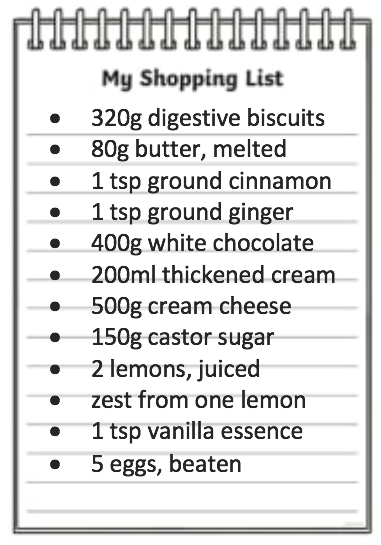
White Chocolate and Lemon Cheesecake

Recipe sourced from Good Food at: https://www.goodfood.com.au/recipes/white-chocolate-and-lemon-cheesecake-20160316-4c4s4

This is a straightforward recipe that’s very easy to follow and understand.

As the cheesecake is baked, it will crack on top when cooked too long. When cooking, it may appear runny but will thicken when cooled, so be cautious to make sure no overcooking occurs.

Make sure the recipe is made the day before needed as it must set in the fridge before being cut to serve

____________________________________________________________

This recipe was made as we love baking and trying new sweet recipes, (especially cheesecake) also the flavour combinations of lemon and white chocolate caught our attention. This was the first time making this recipe and it will be one to try again!

Once the cheesecake was baked, we decided to add extra elements to the dish that would complement the flavours of the cheesecake. The extra elements were not a planned part of this recipe, therefore approximate weights were not taken. Raspberry and strawberry coulis was made by heating water, sugar and berries in a saucepan until thickened. The coulis was cooled and a small amount was added to the whipped cream until desired taste reached. This added a light berry flavour to the dish, as the coulis was very concentrated. Once the cheesecake had cooled, the cake was plated by piping the berry whipped cream onto the top of the cake and around the plate. The coulis was drizzled over the cream and garnished with fresh blueberries. These inclusions added another dimension of textures and flavours to the dish and made it more visually appealing.
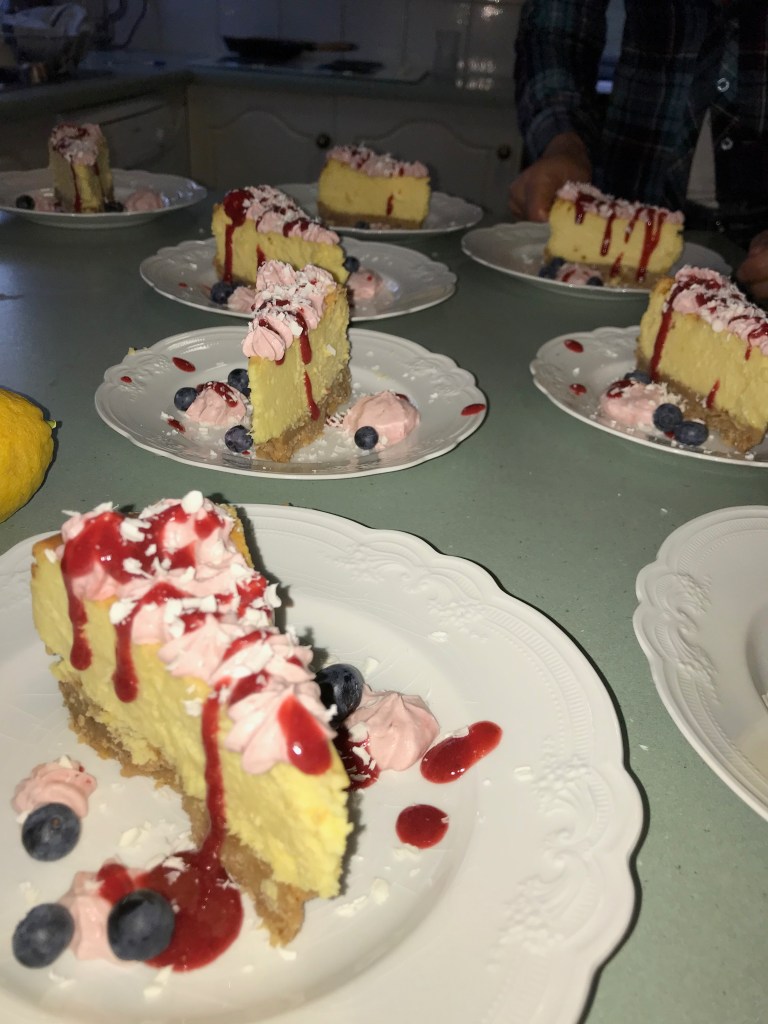
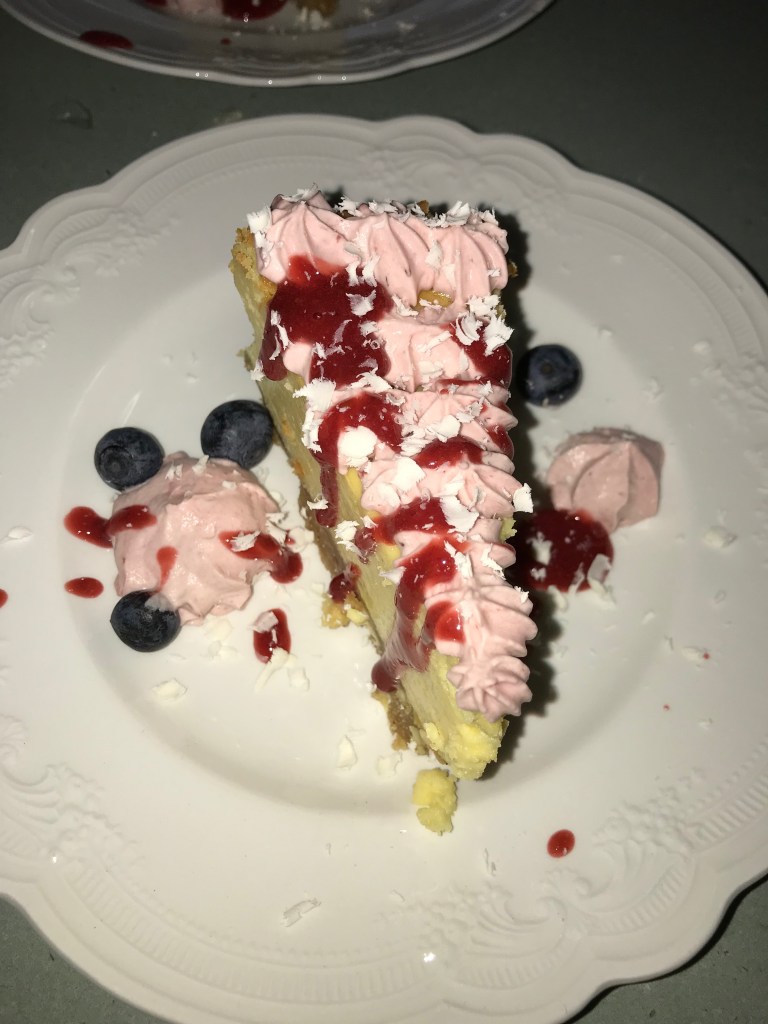
White chocolate and lemon cheesecake, with berry whipped cream, raspberry coulis and fresh blueberries

Changes made to the recipe were the inclusion of more butter to the biscuit base as it was too dry. This made it stick together once cooked, otherwise it could be much crumblier. The extra elements were added to the recipe in order to add more complimenting flavours and textures to the cheesecake.

A problem was that the cake was cooked for too long and started to crack, as it seemed runny but set once it had cooled. The cake still worked out but didn’t look as appealing due to the cracks. I made this recipe for a second time and I did not cook it long enough, therefore it was very delicate and hard to keep intact.
Task 2: Restaurant Review

Harvest Kitchen is a contemporary restaurant located in the Barossa Valley, around one-hour North East of Adelaide. This restaurant provides great views of the sweeping vineyards in the Barossa Valley and is situated at the base of Mengler’s Hill. From the partnering winery, there is the option to wine pair with the meal. Harvest Kitchen isn’t the cheapest restaurant, but the prices are affordable and the food won’t disappoint. The menu changes seasonally to make the most of the local and seasonal produce in the Barossa Valley.

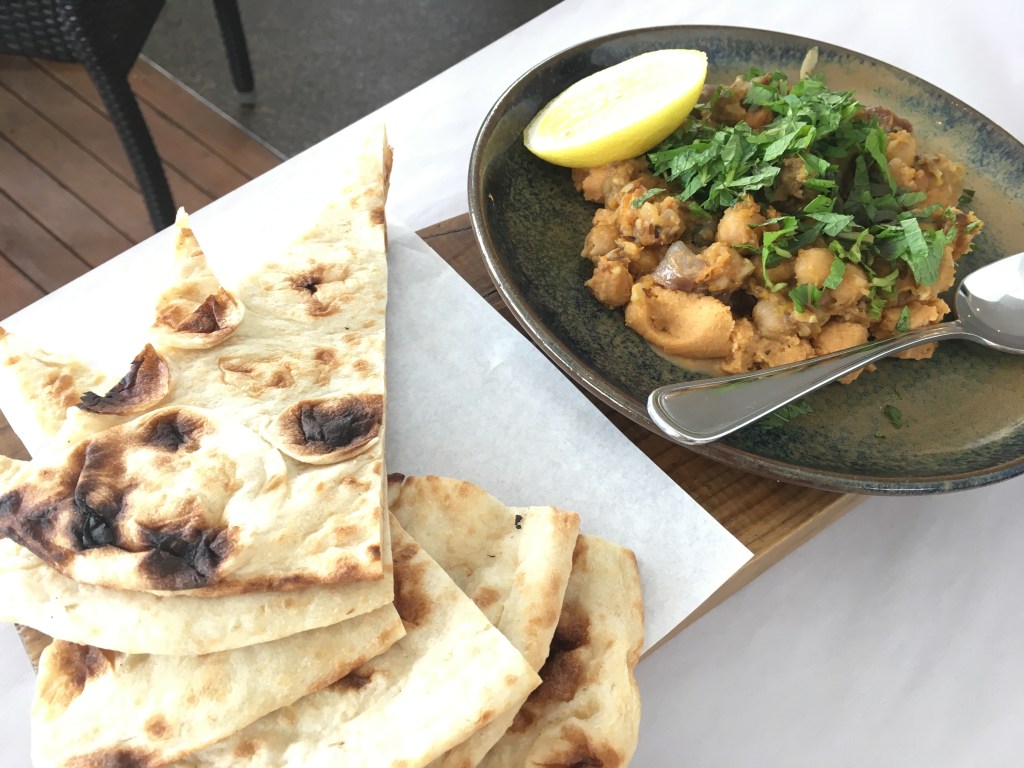
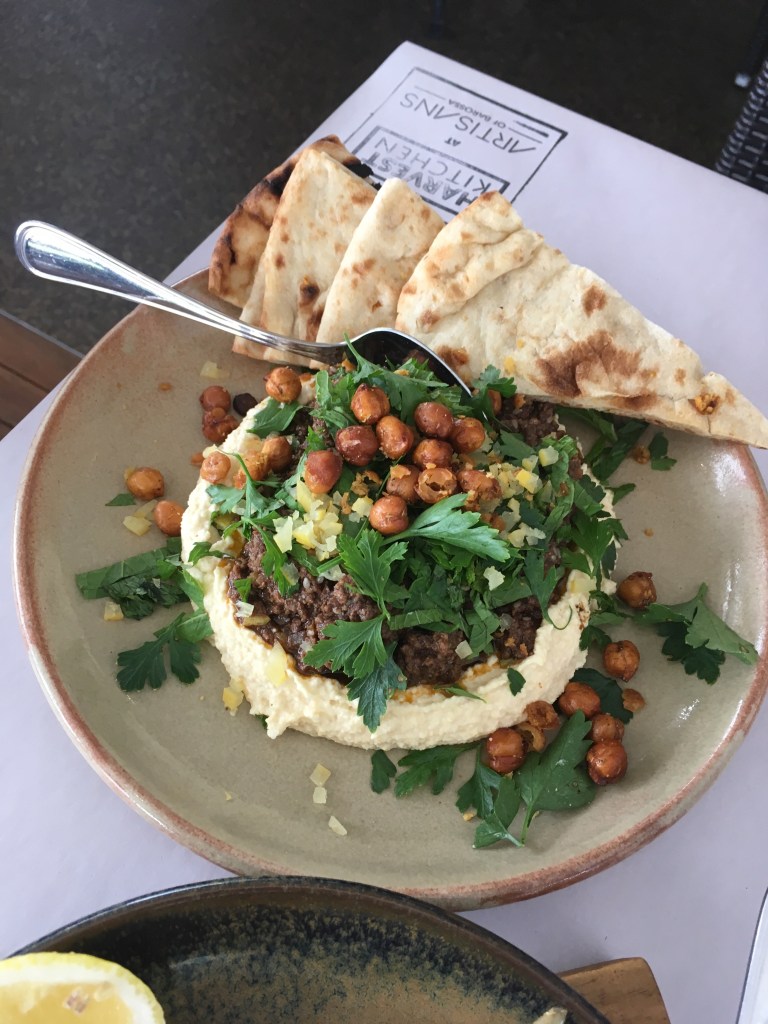
Moroccan lamb mince, hummus, spiced chickpeas with flat bread

Harvest Kitchen is a rustic type of restaurant, browns/neutral earthy coloured and round shaped crockery is used to compliment the food and add to the rustic setting. There is a range of differently sized share dishes priced accordingly as there are no set courses. This menu setup allows the customer to taste what food the restaurant has to offer and mix around food selections according to preference.

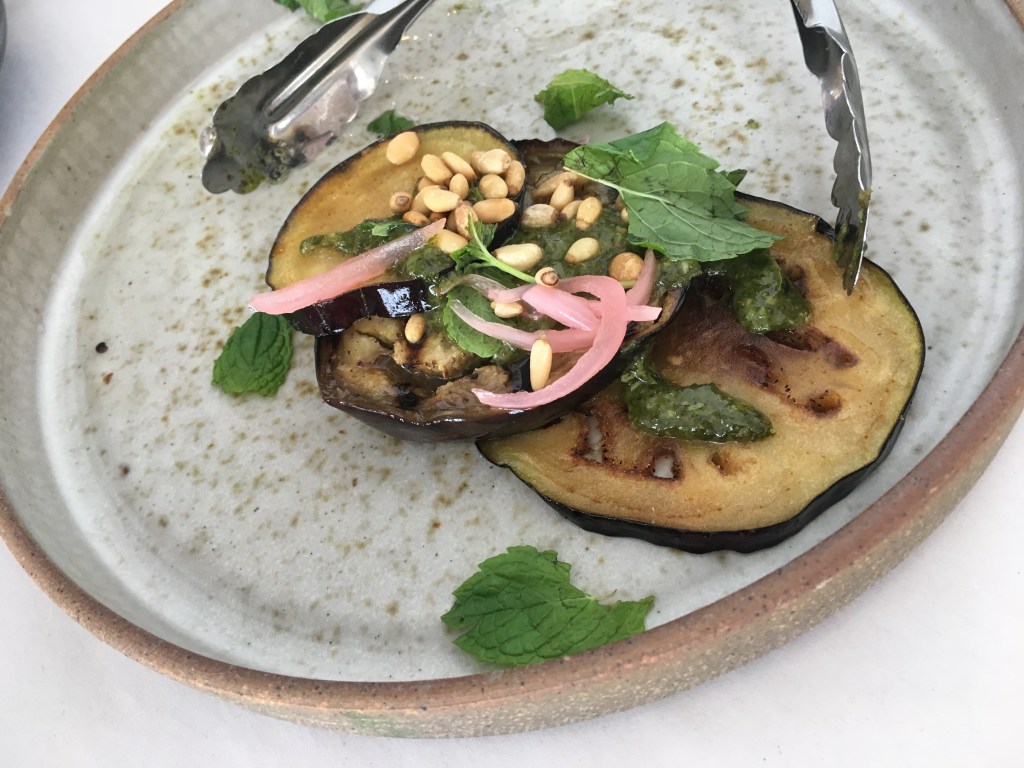
The dishes ordered were Moroccan lamb mince, hummus garnishes with roasted chickpeas and parsley with flatbread; Chickpea tagine with flatbread, and chargrilled eggplant with red onion, mint leaves and toasted pine nuts. For two people, the recommend 1.5 plates each were ordered and it was a struggle to get through all of them as they were quite filling.

The Moroccan lamb was the stand out dish, as the zesty flavour of the hummus complemented the aromatic spices of the lamb and the crunch of the roasted chickpeas. It was a very visually appealing dish and had strong

aromatic spices. This was an amazing dish that could not be faulted.

Chargrilled eggplant with red onion, mint leaves and toasted pine nuts

The chickpea tagine had an explosion of spices, pairing perfectly with the flat bread and a squeeze of lemon. The flatbread completed this dish and

complemented the tagine perfectly. This dish too had a strong aroma of spices, which increased the appeal.  Although it would not be recommend ordering the Moroccan lamb and tagine together as they have similar spices and both contain chickpeas.

The eggplant was refreshing and light to cleanse the pallet from the other dishes. All the flavours complemented one another and the pine nuts added in texture to the dish. Although the dish was slightly overcooked and overpriced for five slices of eggplant.

chickpea tajine with flat bread

Overall, the restaurant had a friendly atmosphere with great service and the food was served within a reasonable time. The food was filling and provided a selection of complimenting flavours and textures. Returning to this restaurant is a must.

Task 1: A How to Post

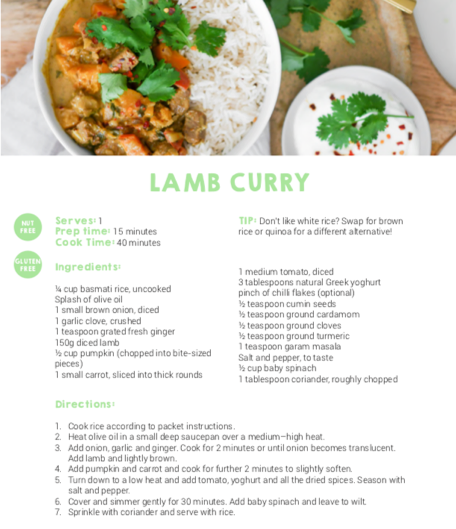
With the recent purchase of a new cookbook called “The BARE Guide” by Leah Itsines we decided to make a recipe that we both hadn’t tried before, a lamb curry. The curry was prepared using the following ingredients; basmati rice (to serve), olive oil, brown onion, garlic, ginger, lamb, pumpkin, carrot, tomato, Greek yoghurt, chilli flakes, cumin, cardamom, cloves, turmeric, garam masala, salt, pepper, baby spinach and coriander. 

This recipe had many herbs and spices included within the recipe that we haven’t had a great deal of exposure to such as turmeric, cloves, cumin and cardamom. We found that these herbs and spices had quite a distinctive flavour that we weren’t necessarily used to. 

Turmeric, also referred to as ‘Indian saffron’ is used as a spice, for its medicinal purposes and for religious ceremonies (Prasad, Aggarwal, 2011). Dating back approximately 4000 years, turmeric was first used in the Vedic culture in India (Prasad, Aggarwal, 2011). Turmeric is a plant that belongs to the ginger family and is grown for the rhizomes which produce the powdered turmeric spice we purchase from stores today (Herbcottage, 2019). It has a mild and spicy aroma with a bitter taste (Herbcottage, 2019).

Cloves are also a spice that is used for both culinary and medicinal purposes. These dried, unopened, flower buds belong to the myrtle family and originate from Indonesian islands (Spice Advice, 2019). They have a strong, pungent and sweet flavour and are commonly found in curries such as ours (Spice Advice, 2019).

Cumin is a spice that is native to the Nile valley located in Egypt (Savory Spice, 2019). Today more than 50% of Cumin is sourced from India (Savory Spice, 2019). It is a spice that is commonly found in curries and chilli powders due to its earthy and mild spice (Savory Spice, 2019).

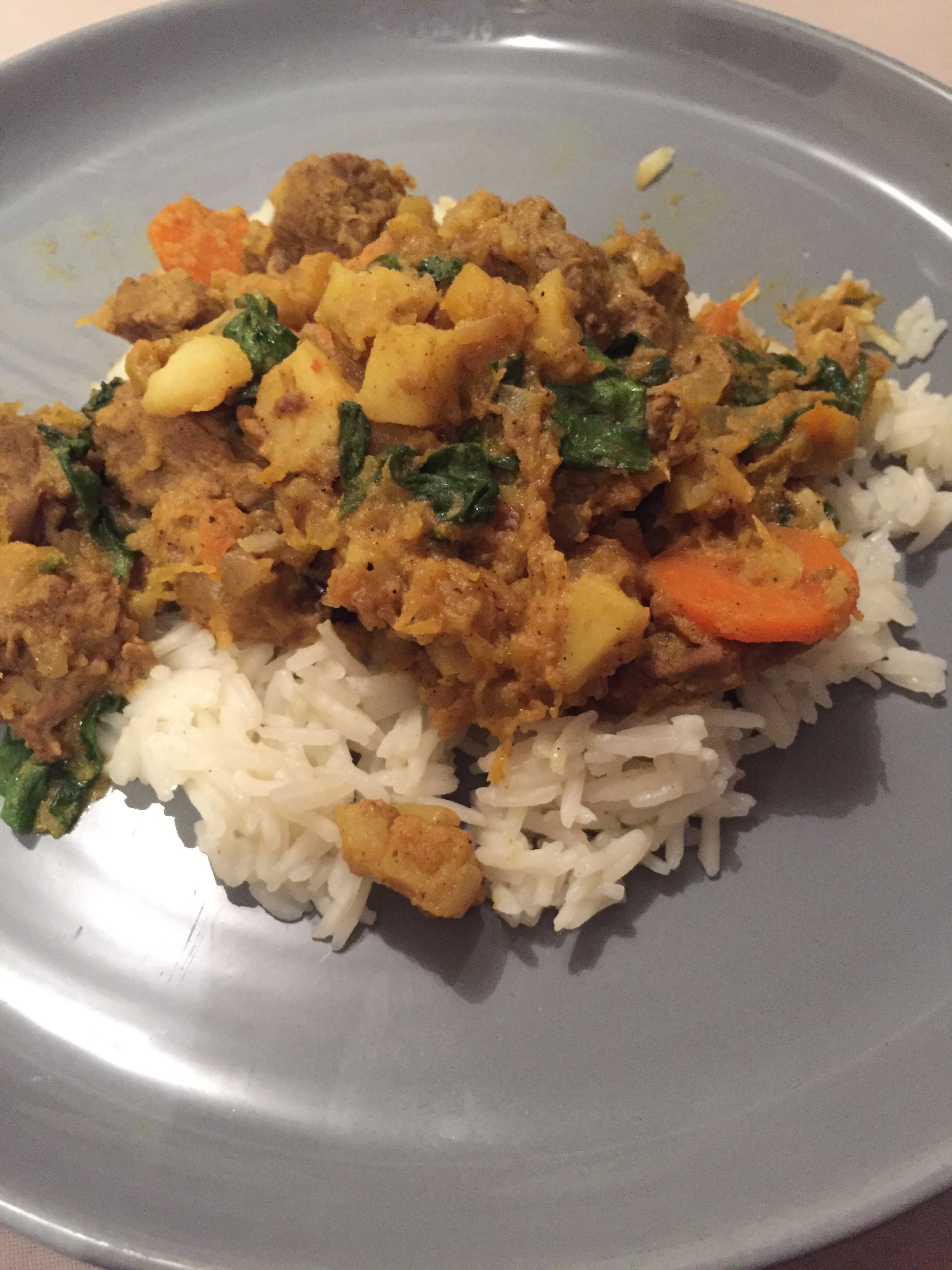
In order to prepare this dish the onion, garlic, ginger and lamb are lightly browned in a frying pan for several minutes or until browned (refer to image 1). The vegetables are then added to soften slightly before the reminder of the ingredients are added to simmer for 30 minutes (refer to image 1). Spinach is added in the last few minutes to wilt before serving (refer to image 1).  

Due to not being able to purchase the lamb fillet stated in the recipe, we had to purchase lamb shank meat. We found that shank meat is very tender when cooked in the right way and thought that it worked well as a substitute for the fillet in the recipe. 

We served the curry on a bed of rice as suggested by the recipe. We decided to add some vegetable stock to the rice while we cooked it on the stove to add more flavour. This was successful and a method that we decided we will most likely use again in the future. 

References:

Herbcottage (2019). Organic Turmeric | Curcuma longa plant – herbcottage. (2019). Retrieved from https://www.herbcottage.com.au/turmeric.html

Itsines, L, 2019, BARE Guide. 

Prasad, S., & Aggarwal, B. B. (2011). Turmeric, the golden spice. In Herbal Medicine: Biomolecular and Clinical Aspects. 2nd edition. CRC Press/Taylor & Francis.

Savory Spice. (2019). Ground Cumin Seeds. Retrieved from https://www.savoryspiceshop.com/ground-cumin-powder.html

Spice Advice. (2019). Retrieved from http://www.spiceadvice.com/encyclopedia/Cloves.html

Task 3: Review of a local food event

‘A Day on the Bay’

A local food event that I (Tyla) have attended previously is called ‘ A Day on the Bay’ and is held in Coffin Bay on the Eyre Peninsular, South Australia. I used to live in Coffin Bay and call this town home still to this day. This event is rather new and has only occurred for roughly 3-4 years in the month of September. 

This food event invites people to visit the small community of Coffin Bay and experience a variety of the seafood from an area of Australia that is well known for its seafood. Through having discussions with Ella, she has eaten seafood from the Coffin Bay and Port Lincoln region and agrees that the produce is some of the best she has tasted.

This event is held at a variety of the local venues throughout Coffin Bay including the sporting club, hotel, yacht club, 1802 – oyster bar and a few others. Each venue has a selection of seafood available for visitors to indulge in. With a broad range of food, wine and local entertainment/ music, ‘A Day on the Bay’ has been a successful way to bring people to the small town. 

Coffin Bay is well known for its production of oysters. ‘A Day on the Bay’ gives visitors the opportunity to view the oyster leases via boat and meet the local seal population for a small price. Other activities that occur throughout the day include a mini Olympics, golf and bowling at the sporting club, sailing and much more.

I have experienced ‘A Day on the Bay’ in several ways. Due to being employed at the local hotel, I was able to experience cooking, preparing and serving visitors our local produce . To hear the enjoyment and love people have for our local produce is truly a rewarding feeling. I have also been able to experience the day as a ‘customer’ and enjoy the taste of our beautiful seafood and wine. This day also encourages families and friends to enjoy the day together. I believe sharing memories with special people on such an amazing day is a great way to indulge in appreciate and support the community and their local produce.

I would highly recommend to anyone that has never been to Coffin Bay to go and experience the amazing views and seafood they have on offer. If you are lucky enough to go to ‘A Day on the Bay’ it is a day of pure enjoyment and you will not regret it.