With the recent purchase of a new cookbook called “The BARE Guide” by Leah Itsines we decided to make a recipe that we both hadn’t tried before, a lamb curry. The curry was prepared using the following ingredients; basmati rice (to serve), olive oil, brown onion, garlic, ginger, lamb, pumpkin, carrot, tomato, Greek yoghurt, chilli flakes, cumin, cardamom, cloves, turmeric, garam masala, salt, pepper, baby spinach and coriander.
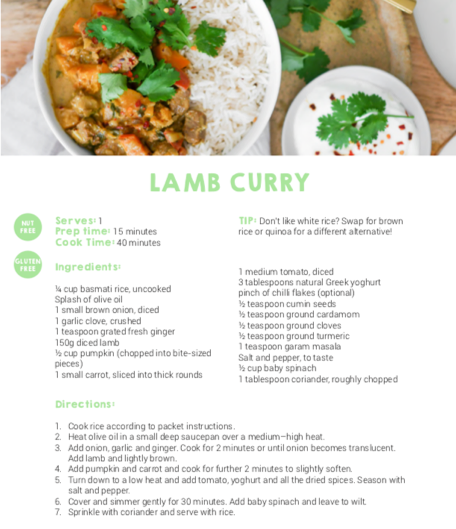
Recipe used from Leah Itsines BARE guide.
This recipe had many herbs and spices included within the recipe that we haven’t had a great deal of exposure to such as turmeric, cloves, cumin and cardamom. We found that these herbs and spices had quite a distinctive flavour that we weren’t necessarily used to.
Turmeric, also referred to as ‘Indian saffron’ is used as a spice, for its medicinal purposes and for religious ceremonies (Prasad, Aggarwal, 2011). Dating back approximately 4000 years, turmeric was first used in the Vedic culture in India (Prasad, Aggarwal, 2011). Turmeric is a plant that belongs to the ginger family and is grown for the rhizomes which produce the powdered turmeric spice we purchase from stores today (Herbcottage, 2019). It has a mild and spicy aroma with a bitter taste (Herbcottage, 2019).
Cloves are also a spice that is used for both culinary and medicinal purposes. These dried, unopened, flower buds belong to the myrtle family and originate from Indonesian islands (Spice Advice, 2019). They have a strong, pungent and sweet flavour and are commonly found in curries such as ours (Spice Advice, 2019).
Cumin is a spice that is native to the Nile valley located in Egypt (Savory Spice, 2019). Today more than 50% of Cumin is sourced from India (Savory Spice, 2019). It is a spice that is commonly found in curries and chilli powders due to its earthy and mild spice (Savory Spice, 2019).
In order to prepare this dish the onion, garlic, ginger and lamb are lightly browned in a frying pan for several minutes or until browned (refer to image 1). The vegetables are then added to soften slightly before the reminder of the ingredients are added to simmer for 30 minutes (refer to image 1). Spinach is added in the last few minutes to wilt before serving (refer to image 1).
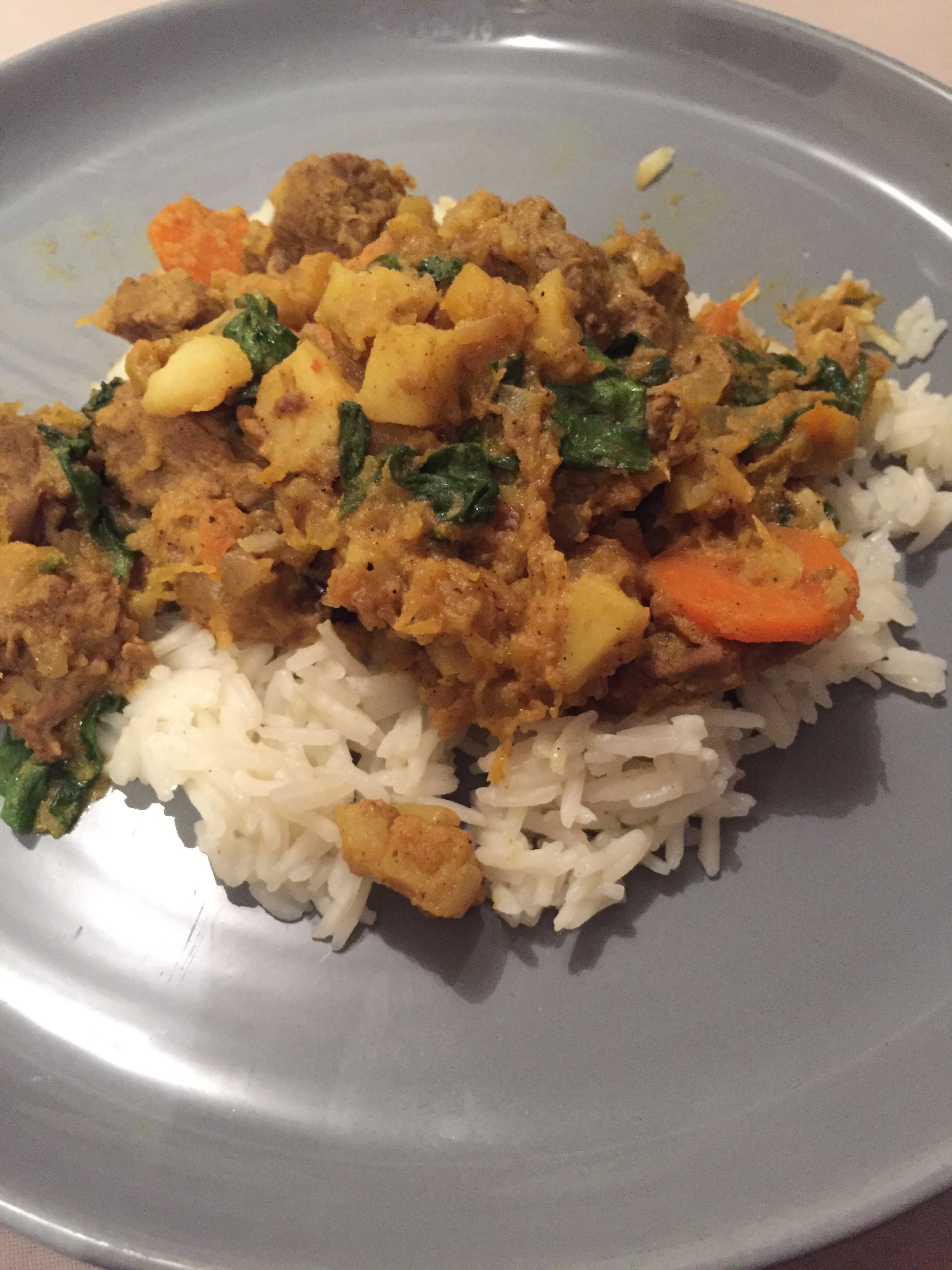
Photograph of our final product.
Due to not being able to purchase the lamb fillet stated in the recipe, we had to purchase lamb shank meat. We found that shank meat is very tender when cooked in the right way and thought that it worked well as a substitute for the fillet in the recipe.
We served the curry on a bed of rice as suggested by the recipe. We decided to add some vegetable stock to the rice while we cooked it on the stove to add more flavour. This was successful and a method that we decided we will most likely use again in the future.
References:
Herbcottage (2019). Organic Turmeric | Curcuma longa plant – herbcottage. (2019). Retrieved from https://www.herbcottage.com.au/turmeric.html
Itsines, L, 2019, BARE Guide.
Prasad, S., & Aggarwal, B. B. (2011). Turmeric, the golden spice. In Herbal Medicine: Biomolecular and Clinical Aspects. 2nd edition. CRC Press/Taylor & Francis.
Savory Spice. (2019). Ground Cumin Seeds. Retrieved from https://www.savoryspiceshop.com/ground-cumin-powder.html
Spice Advice. (2019). Retrieved from http://www.spiceadvice.com/encyclopedia/Cloves.html

 Ella & Tyla's Food Blog